| Arthur Merton Hazard 1872 - 1930 |
Arthur Merton Hazard is one of those unsung artists who helped transition from one movement to another, in his case, he's part of the forgotten bridge between American Impressionism and California Plein Air.
Art history often celebrates the giants—Childe Hassam, John Singer Sargent, William Merritt Chase, William Wendt, and Guy Rose. Yet between those celebrated names lies a generation of gifted painters who quietly connected one artistic era to the next. Among the finest of these was Arthur Merton Hazard (1872–1930).
|
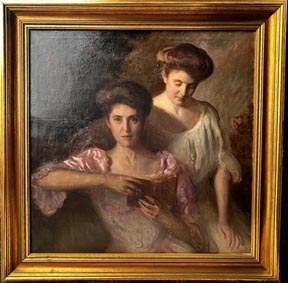
Sisters
Oil on canvas, 36 x 36 |

Lupines on a California Hillside, 1923
oil on canvas, 20 x 24 |
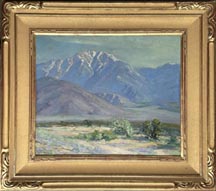
Mount San Jacinto in Winter
oil on board, 20 x 24 |

Bird and Seal Rocks, California
oil on canvas laid down on board
12 x 15 |

Seine Boat, Provincetown, 1922
watercolor, 13 1/8 x 19 1/4 |

Sunset on Cape Cod, 1922
watercolor, 14 x 19, offered unframed |
Today, Hazard is known primarily to devoted collectors and scholars, but during his lifetime he enjoyed a respected career as both an accomplished painter and teacher. Trained in Boston and Paris, he absorbed the refined academic traditions that shaped the Boston School while embracing the fresh color and natural light inspired by the American Impressionists. When he relocated to Los Angeles in 1923, he carried those influences west, where they blended naturally with the emerging California plein air movement. |
Hazard's paintings reveal an artist equally at home painting elegant portraits, sunlit gardens, rugged coastlines, and California hillsides. His work possesses the solid draftsmanship and thoughtful composition of the East Coast academies, yet his later landscapes sparkle with the brilliant light and open-air freshness that define California painting. Rather than belonging wholly to either tradition, Hazard occupies the fascinating middle ground between them.
Perhaps that is why he has been somewhat overlooked. He arrived just after the first generation of American Impressionists had transformed American painting and just before the California plein air painters reached the height of their popularity. Yet this unique position makes his work especially rewarding today. Arthur Merton Hazard stands as an important transitional figure—an artist who helped carry the artistic ideals of the East Coast across the continent, where they evolved into one of America's most distinctive regional schools of painting.
Nearly a century after his death, Hazard's paintings continue to remind us that the story of American art is shaped not only by its most famous names, but also by the remarkable artists who connected one generation to the next.
|